
Finding out you have placenta previa can feel frightening, especially when you’re already juggling the usual worries of pregnancy. If you’ve noticed unexpected spotting or bleeding and searched for answers at 2 a.m., you’re not alone. This condition affects a small percentage of pregnancies, but it needs careful monitoring because it changes how your delivery is planned. The good news? With timely diagnosis and the right obstetric care, most women with placenta previa go on to have healthy babies and safe deliveries.
This guide walks you through everything what causes it, how it’s diagnosed, treatment choices, and when to rush to a doctor.
Quick Summary Box
- Placenta previa happens when the placenta partially or fully covers the cervix
- Main symptom: painless, bright red vaginal bleeding, usually after 20 weeks
- Diagnosed through routine ultrasound scans
- Treatment ranges from monitoring to planned C-section delivery
- Vaginal delivery is usually not safe if the placenta covers the cervix at term
- Regular prenatal visits catch this early, before symptoms appear
What Is Placenta Previa?
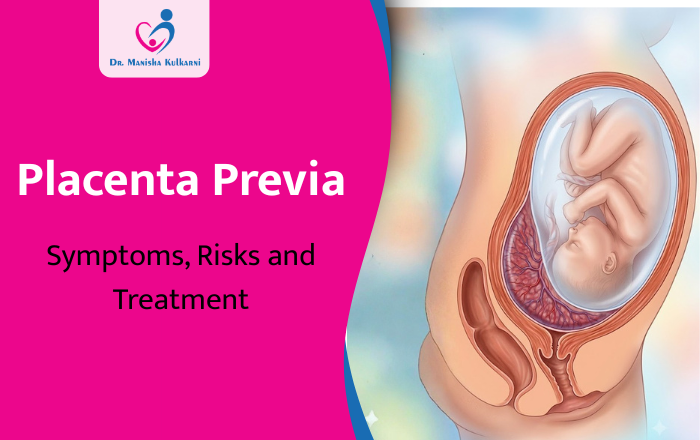
Placenta previa is a pregnancy condition where the placenta implants low in the uterus, partially or completely covering the cervical opening. Normally, the placenta attaches higher up, away from the cervix. When it sits too low, it can block the baby’s exit route and raises the risk of bleeding, particularly as the cervix begins to soften and stretch later in pregnancy.
Most cases are picked up during a routine mid-pregnancy ultrasound, often before a woman notices any symptoms at all.
Types of Placenta Previa
| Type | Description |
|---|---|
| Complete previa | Placenta fully covers the cervix |
| Partial previa | Placenta covers part of the cervical opening |
|
Marginal previa |
Placenta edge touches the cervix border |
| Low-lying placenta | Placenta sits close to, but not touching, the cervix |
Many low-lying placentas identified early in pregnancy move upward naturally as the uterus grows — this is called “placental migration.”
Causes and Risk Factors
There isn’t one single cause, but certain factors raise the likelihood of placenta previa in pregnancy:
- Previous cesarean delivery
- Prior uterine surgery (like fibroid removal)
- Multiple pregnancies (twins or more)
- Advanced maternal age (35+)
- Smoking during pregnancy
- History of placenta previa in an earlier pregnancy
- Short interval between pregnancies
- Previous D&C or uterine scarring
Understanding these placenta previa risk factors helps your doctor keep a closer eye on your scans, even if you feel completely fine.
Symptoms of Placenta Previa
The hallmark placenta previa symptom is sudden, painless vaginal bleeding — usually bright red — that appears in the second half of pregnancy. It can happen without warning, sometimes after light activity, sex, or even at rest.
Other things women report:
- Bleeding that stops and then returns days or weeks later
- Mild cramping (less common than with other pregnancy complications)
- Baby’s position noted as breech or transverse on ultrasound
Symptoms vs Normal Pregnancy Changes
| Sign | Placenta Previa | Normal Pregnancy Spotting |
|---|---|---|
| Bleeding color | Bright red | Brown or pink |
| Pain | Usually painless | May have mild cramping |
| Timing | After 20 weeks | Any trimester |
| Pattern | Can be heavy, sudden | Light, brief |
If you’re ever unsure, don’t try to self-diagnose — get checked the same day.
How Is Placenta Previa Diagnosed?
Placenta previa diagnosis typically happens through:
- Transvaginal ultrasound – the most accurate method for locating the placenta
- Abdominal ultrasound – often the first scan that flags a low-lying placenta
- Follow-up scans around 32–36 weeks to check if the placenta has moved
Your obstetrician will avoid internal pelvic exams once previa is suspected, since these can trigger bleeding.
Treatment Options
Placenta previa treatment depends on how far along you are, how much bleeding you’ve had, and where exactly the placenta sits.
| Situation | Typical Approach |
|---|---|
| No bleeding, previa found early | Watchful monitoring, repeat scans |
| Mild bleeding, preterm | Pelvic rest, activity restriction, hospital observation if needed |
| Heavy bleeding | Hospitalization, possible blood transfusion, steroid injections for baby’s lungs if preterm |
| Previa persists near term | Planned cesarean delivery, usually around 36–37 weeks |
Vaginal delivery is generally avoided when the placenta still covers the cervix at term, since it can cause severe bleeding for both mother and baby. Your doctor will personalize the plan based on your specific scans there’s no one-size-fits-all approach here.
Home Care Tips (When Advised by Your Doctor)
- Avoid heavy lifting and strenuous exercise
- No intercourse if previa is confirmed
- Rest with feet elevated when possible
- Keep your hospital bag ready earlier than usual
- Track any bleeding — note color, amount, and timing
Possible Complications
Left unmonitored, placenta previa complications can include:
- Severe maternal hemorrhage
- Preterm birth
- Placenta accreta (abnormal attachment to the uterine wall)
- Need for emergency cesarean
- Fetal growth restriction in rare, severe cases
This is exactly why regular scans matter, even without symptoms.
When to See a Doctor / Emergency Warning Signs
Call your doctor or go to the hospital immediately if you notice:
- Any bright red vaginal bleeding, however light
- Bleeding accompanied by contractions
- Reduced baby movements
- Dizziness, fainting, or a racing heartbeat alongside bleeding
Pregnancy bleeding should never be ignored even a small amount deserves prompt medical attention.
When Should You Consult a Specialist?
If you’re experiencing pregnancy bleeding, have been told you have a high-risk pregnancy, or your scan shows a low-lying placenta, it’s time to consult an experienced obstetrician for placenta previa rather than waiting it out. Early evaluation helps your care team plan monitoring, activity guidelines, and delivery timing that’s right for your specific situation.
For women in Magarpatta, Hadapsar, and surrounding parts of Pune, Dr. Manisha Kulkarni, Gynecologist & Obstetrician at Racemous Polyclinics, offers personalized evaluation and ongoing high-risk pregnancy care in Pune. Every case of placenta previa looks a little different, so a proper in-person assessment matters more than online guidance alone.
Meet Our Doctor
Dr. Manisha Kulkarni
Gynecologist & Obstetrician
📍 Racemous Polyclinics, Magarpatta, Hadapsar, Pune
Services: Pregnancy Care, High-Risk Pregnancy Management, Placenta Previa Evaluation & Treatment, Antenatal Care, Women’s Health
As a trusted gynecologist & obstetrician in Hadapsar, Dr. Kulkarni focuses on clear communication and individualized care plans for every stage of pregnancy.
Book a consultation for expert pregnancy care and personalized treatment.
Frequently Asked Questions
1. What is placenta previa in simple terms?
It’s a condition where the placenta lies low in the uterus and covers part or all of the cervix, which can block the baby’s path during delivery and cause bleeding later in pregnancy.
2. Is placenta previa dangerous?
It can be, mainly due to the risk of heavy bleeding. With regular monitoring and appropriate care, most women deliver safely, though the delivery method is usually a planned cesarean.
3. Can placenta previa correct itself?
Yes, many low-lying placentas move upward as the uterus grows, especially if diagnosed before 24 weeks. Later diagnoses are less likely to resolve on their own.
4. What are the first signs of placenta previa?
The earliest sign is usually sudden, painless, bright red vaginal bleeding after the 20th week of pregnancy, sometimes without any triggering activity.
5. Can I have a normal delivery with placenta previa?
If the placenta still covers the cervix near term, vaginal delivery isn’t considered safe. Your doctor will confirm the placenta’s position through ultrasound before deciding.
Have questions? We’re just a message away! Contact us on WhatsApp — Click Here to Chat with Us
